Common Misconceptions About Sunderland AFC
Sunderland AFC, one of England's most historic and storied football clubs, is often misunderstood from the outside. While fans celebrate a rich tapestry of triumphs, tragedies, and unwavering passion, external narratives can sometimes paint an incomplete or inaccurate picture. From perceptions of a "yo-yo club" to oversimplifications of its modern identity, several misconceptions persist. This article aims to separate fact from fiction, delving into the true character and history of the Black Cats.
Misconception 1: Sunderland is a "Yo-Yo Club" with No Sustained Success
One of the most common labels attached to Sunderland is that of a perennial "yo-yo club," bouncing between divisions without a stable identity. While the club has experienced relegations and promotions, this characterization ignores its foundational status and long periods of top-flight dominance. Sunderland was a founding member of the Football League and spent a remarkable 68 consecutive seasons in the top division from 1890 to 1958—a record at the time. The club was a powerhouse in the late 19th and early 20th centuries, winning six First Division titles. This era, known as the "Team of All Talents", established Sunderland as a genuine giant of the English game, not a transient entity.
The post-war period also saw significant success, including the famous 1973 FA Cup Final victory over Leeds United, a triumph that defied all odds. While the late 20th and early 21st centuries brought more volatility, including the recent spell in League One, the club's history is fundamentally one of establishment and resilience, not perpetual instability. The Premier League era from 1996-2017 included several sustained top-flight campaigns and memorable achievements, further challenging the simplistic "yo-yo" narrative.
Misconception 2: The Club's History is Defined Solely by the 1973 FA Cup
There is no doubt that the 1973 FA Cup win is a sacred pillar of Sunderland's identity—a moment of magic where a Second Division side defeated the mighty Leeds United. However, to define the club's entire 145-year history by this one glorious afternoon is a significant misconception. Sunderland's story is far deeper. Its origins as a club formed by schoolteachers in 1879, detailed in The Foundation of Sunderland AFC, speak to its deep community roots. The six league titles won before World War I represent a level of sustained excellence that few clubs can match.
The interwar years, the post-war rebuilding, and the dramatic promotion battles of the 1990s are all critical chapters. While 1973 is the emotional apex for many, it is a jewel in a much larger crown. The club's complete journey is best understood through a comprehensive timeline of major events.
Misconception 3: The Stadium of Light Lacks Atmosphere Compared to Roker Park
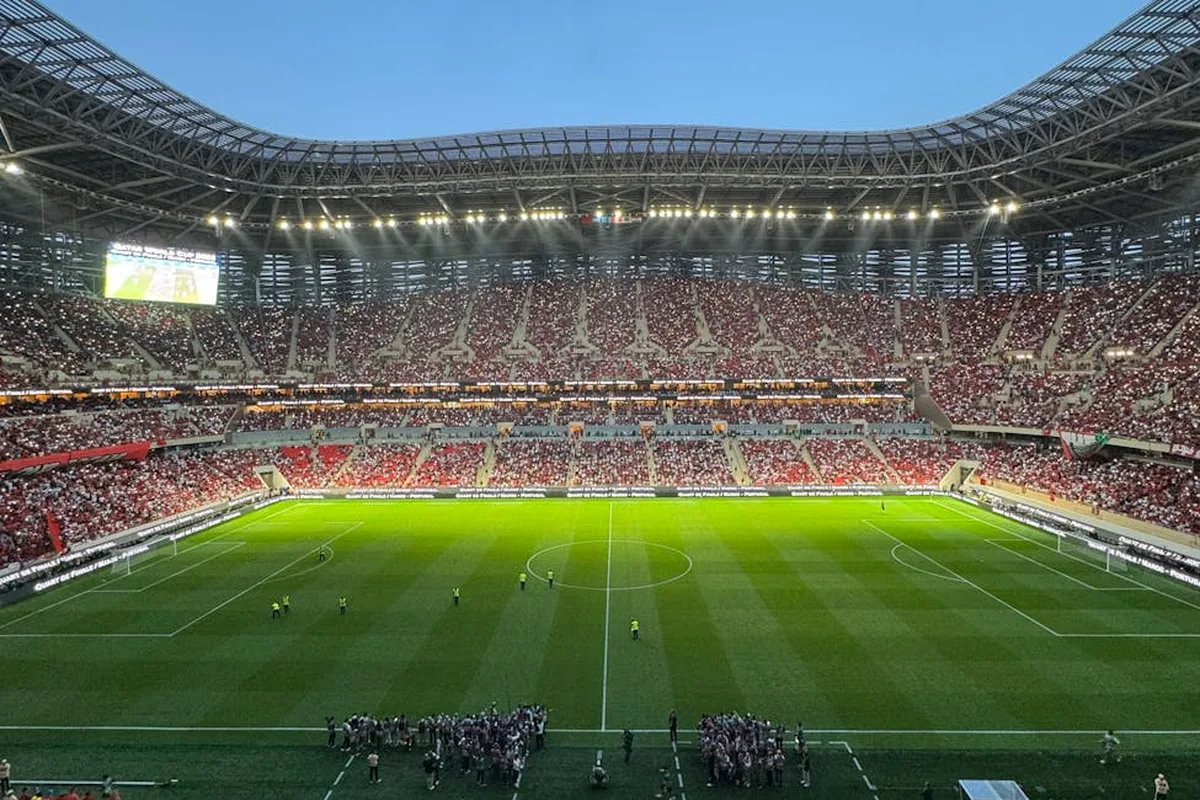
Nostalgia for a club's old ground is powerful and universal. Roker Park, Sunderland's home for 99 years, was undoubtedly a cauldron of noise and intimacy, with memories enshrined in its stands. The move to the Stadium of Light in 1997 was a monumental shift, necessary for modern football. A common misconception is that this state-of-the-art arena cannot replicate the atmosphere of its predecessor. This overlooks the incredible efforts to transplant the club's soul into its new home.
The Stadium of Light was designed with atmosphere in mind. Its steep, continuous bowls bring fans close to the pitch, and the acoustics are engineered to amplify noise, creating the famous "Roar of the Black Cats." The stadium is also a living museum of the club's heritage, featuring art and installations that celebrate Sunderland's past. While the ghosts of Roker Park will always be cherished, the Stadium of Light has forged its own legendary nights and a modern, powerful atmosphere that rivals any in the country. You can explore the full story of this transition in our article on the move from Roker Park in 1997.
Misconception 4: Sunderland Has No Notable European History
Given the club's recent history, it's easy to forget that Sunderland has competed on the European stage. While not as extensive as some clubs, the Black Cats have had continental adventures. Their most notable foray came in the 1973-74 European Cup Winners' Cup, following their FA Cup triumph. Sunderland faced prestigious opponents like Sporting CP of Portugal, experiencing the unique challenge and excitement of European competition at Roker Park under the floodlights.
These European nights, though limited, are a cherished part of the club's tapestry and demonstrate that Sunderland's history extends beyond domestic borders. They represent an ambition and achievement that the club and its supporters aspire to reach again. For more on the club's continental campaigns, the UEFA website maintains historical records of all European competitions.
Misconception 5: The Academy Hasn't Produced Top Talent Recently
A narrative sometimes suggests that Sunderland's famed youth production line has stalled. This is a misreading of the facts. The Academy of Light has consistently been one of the most productive in England. In recent years, it has developed players like Jordan Pickford, who became England's number-one goalkeeper and a record transfer from Everton, and Jordan Henderson, who captained Liverpool to Champions League and Premier League glory. Both are graduates of the Sunderland system.
The current first-team squad continues to be bolstered by academy products, a testament to the club's enduring youth development philosophy. The pathway from academy to first team remains clear and active, disproving the idea that the talent well has run dry. The success of these players on the world stage is a point of immense pride and a key part of the club's modern identity.
Misconception 6: The Tyne-Wear Derby is a One-Sided Rivalry
To those only casually aware of the North East's football landscape, the rivalry between Sunderland and Newcastle United might seem dominated by the Magpies, especially given recent top-flight disparities. However, a look at the historical record tells a different story. The derby is famously competitive and historically balanced. Sunderland holds positive records in certain periods and has delivered some of the fixture's most iconic moments, including a 5-1 victory at St. James' Park in 2010 and a 3-0 win at the Stadium of Light in 2013.
The passion and unpredictability of the derby are what define it, not one-sided dominance. For a full appreciation of this intense rivalry, explore our complete history of the Tyne-Wear Derby. The rivalry's depth is also chronicled by authoritative football history sources like the Football Association.
Misconception 7: The Club's Recent Rebuilding is Unique or Unprecedented
The challenges following relegation from the Premier League in 2017 and the subsequent drop to League One were profound. However, the idea that this period of "rebuilding" is an anomaly in Sunderland's history is a misconception. The club's story is cyclical, marked by several eras of decline and resurgence. The post-war period required rebuilding after the golden era. The 1980s were a battle for survival, both on and off the pitch, as detailed in our look at Sunderland's 1980s survival battles.
Each time, the club has regrouped, often emerging stronger. The current project, focusing on a younger squad, sustainable finance, and a clear playing philosophy under the Kyril Louis-Dreyfus regime, is the latest chapter in this long tradition of resilience. It is not a strange new fate but part of the fabric of a club that has always fought its way back.
Conclusion: A Club of Depth and Resilience
Sunderland AFC is far more than the sum of its recent setbacks or its most famous single victory. It is a club with a founding role in English football, a history of genuine dominance, a world-class academy, and one of the most passionate supporter bases in the game. The misconceptions often arise from a narrow, presentist view. When you examine the full sweep of history—from its Victorian pioneers to its present-day rebuilding—you find a institution defined by depth, tradition, and an unbreakable spirit. Understanding these truths is key to understanding the real Sunderland.